
Esther Liu
Director, Head of Research & Consultancy, Greater China
Hong Kong Office MarketNovember 2026
Relocate or Not to Relocate
This report analyses Hong Kong’s next wave of office decentralisation and recentralisation across key office submarkets.
Read the report
Chapter 01 / 06
The V-shaped rebound in Premium Central has slammed the door on cheap core space. After a grinding 36-month downcycle, Premium Central rents surged 28.8% from their August 2025 trough to HK$130 psf in September 2026—erasing three years of declines in just 13 months. Core vacancy has dropped from 14.5% at the start of the year to 6.9%, driven by a resurgence in mainland IPOs alongside growth in the asset management and private wealth sectors. With flagship assets like One and Two IFC effectively at full occupancy and effective rents climbing, the flight-to-quality phase is rapidly hitting a capacity ceiling.
Upcoming tight supply makes decentralisation inevitable once again. Unlike in previous cycles, core-adjacent options are scarce: Admiralty’s waterfront corridor sits at a tight 4% vacancy and cannot absorb large expansion mandates. As a result, two distinct trends are emerging.
De-Centralisation: Occupiers requiring large floorplates, premier specifications, and harbour views are increasingly looking outward. The rental gap has reopened aggressively, with the Central-to-fringe discount widening back to multi-year highs and shifting corporate strategies from core consolidation back to cost-effective decentralisation.
Two distinct submarkets are poised to capture this outward spillover:
Re-centralisation: Conversely, occupiers with strong stickiness to Central can choose to stay or relocate back to lock in rents before they climb further. Tenants can still secure prime core space by tapping into existing vacancies and confirmed upcoming exits, including Jane Street’s departure from Chater House (105,000 sq ft NFA), as well as available space in Cheung Kong Center I (approx. 25% vacancy) and Exchange Square I & II (approx. 10% vacancy, or roughly 100,000 sq ft).
Chapter 02 / 06
The race for premier office space in Hong Kong has reached an inflection point. Driven by a rebound in Chinese IPOs and sustained mainland capital inflows, One and Two IFC are nearing full capacity. While it took roughly two years to fill recent additions such as Cheung Kong Center II and The Henderson, expansion from asset management and securities firms has emerged as a major driver of the current leasing rally.
The primary catalyst behind this wave is the rapid growth of quantitative trading firms, multi-strategy hedge funds, and private capital managers. Fuelled by regional trading activity and the consolidation of APAC headquarters in Hong Kong, firms including SIG, Point72, Qube Research & Technologies, and Jane Street have aggressively leased large, contiguous floorplates across Central. SFC Type 9 License, continuous growth in asset management firm set up since 2023 has a track record as a leading indicator of such trend.
This momentum is no longer confined to Central; it is generating a clear spillover effect across the wider market. Over the first three quarters of 2026, net absorption for Hong Kong Grade-A offices reached 139% of 2025’s full-year level, already outpacing total new supply for 2026. With pipeline deliveries remaining modest over the next four years—and new Central supply only arriving in 2027 and 2031 onwards—rents are positioned on a sustained upward trajectory.
At the same time, as core rents climb and contiguous prime space grows scarce, occupiers seeking larger, modern floorplates are increasingly looking beyond traditional Central—where the average building age is around 40 years—toward emerging commercial hubs such as Causeway Bay and West Kowloon. Meanwhile, several law firms have relocated to Quarry Bay to capture meaningful cost savings.
The rent gap between Central and decentralised districts has widened due to surging core rents. Relocating to West Kowloon, Causeway Bay, or Quarry Bay can save occupiers up to HK$35–66 per sq ft, prompting some existing Central tenants to decentralise.
Chapter 03 / 06
The CBD relocation trend is no longer a broad, fragmented scatter—it is a concentrated, one-way flight across Victoria Harbour. Between 2024 and Q3 2026, over NFA of 896,126 sq ft office space relocated out of the core CBD (Central, Admiralty, Sheung Wan). The relocation map reveals sharp, district-by-district polarities:
When Central occupiers relocate, they don’t downscale to fringe Hong Kong Island—they cross the harbour in bulk.
Central tenants are executing large-footprint consolidations. Rather than compromising on building grade or fragmenting operations, core occupiers are trading Central postcodes directly for institutional scale and High-Speed Rail connectivity in West Kowloon.
Sheung Wan saw substantial displacement across 357,099 sq ft net of outbound moves, acting as a feeder pool across the city:
Mid-market financial and professional firms in Sheung Wan either seized the window to upgrade into Central or decamped entirely to West Kowloon and South Island for cost relief.
Admiralty occupiers stayed firmly tied to the core corridor, showing near-zero appetite for decentralized fringe markets:
Admiralty occupiers demonstrate strong locational inertia. They are either upgrading into core Central or shifting one MTR stop east to Wan Chai to preserve proximity to government and institutional hubs.
Chapter 04 / 06
De-Centralisation
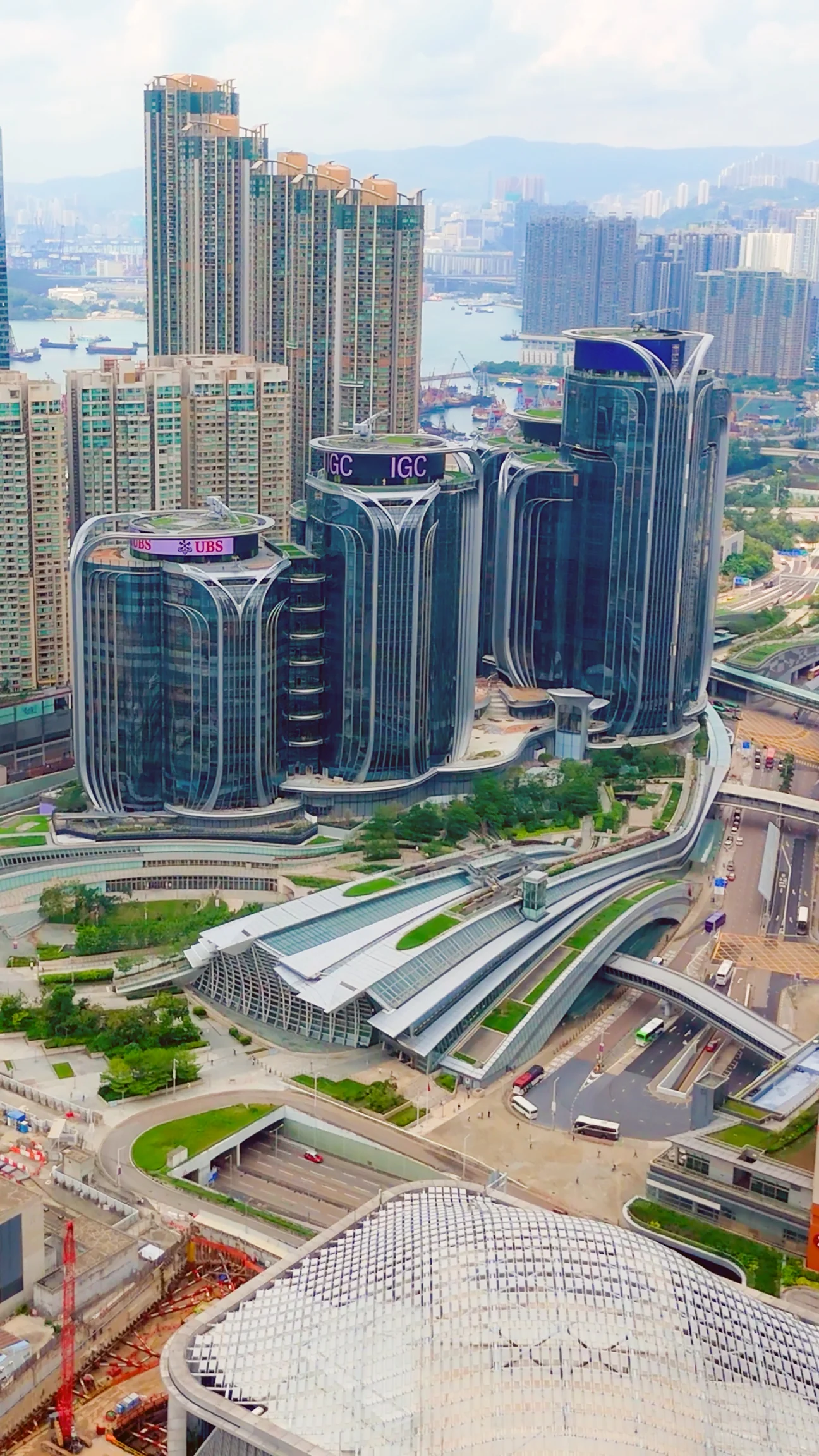
The completion of IGC and AST brings West Kowloon’s Grade-A office stock to over 4.2 million square feet of net effective area—matching or exceeding the total commercial office inventory of Admiralty, 80% of Premium Central, or 70% of core Tsim Sha Tsui.
The completion of Lee Garden 8 in Causeway Bay brings in a NFA of 820,000 sq ft of new Grade-A office stock to over 3.7 million square feet of net effective area.
Re-Centralisation
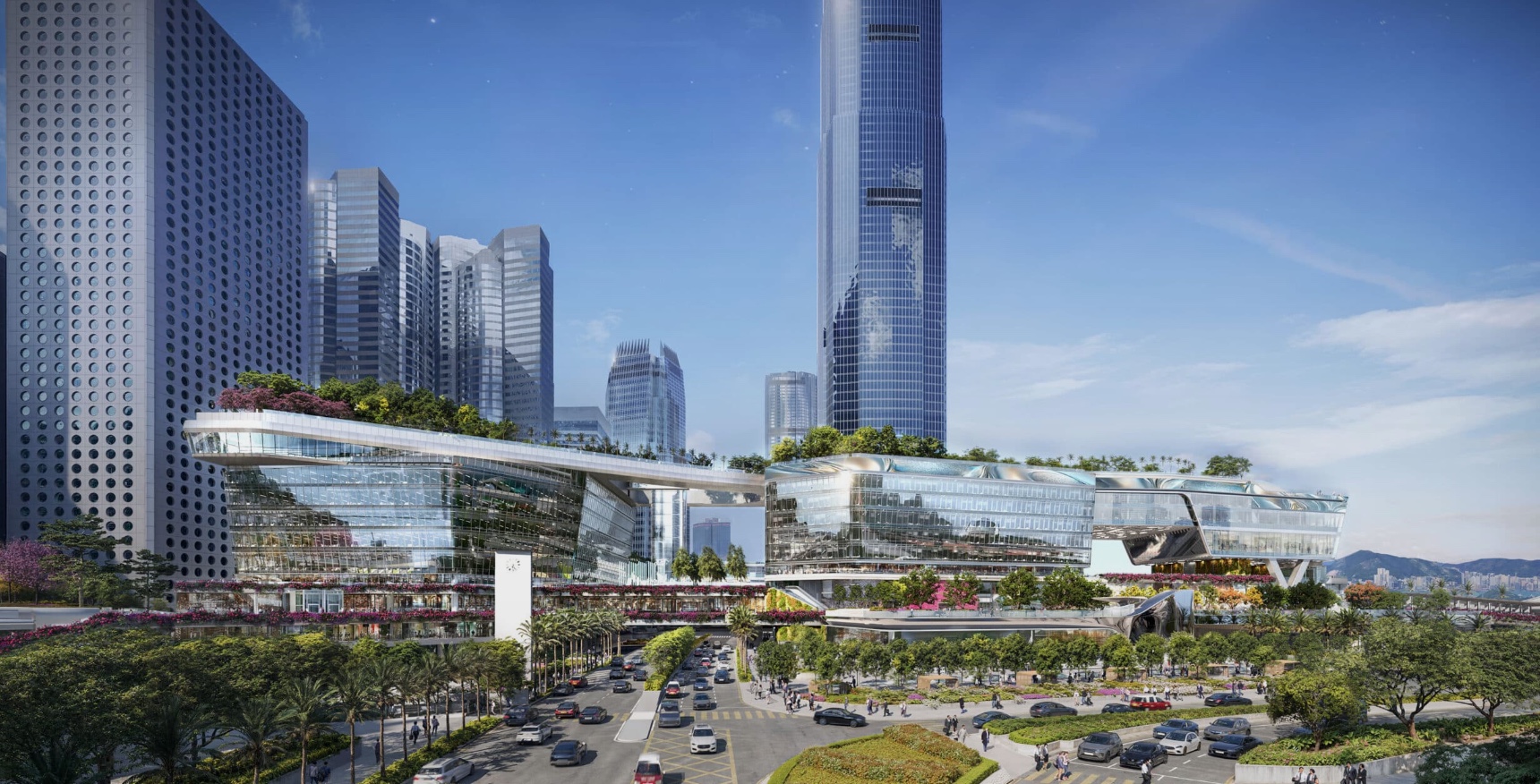
The completion of Central Crossing in Central adds an NFA of 218,000 sq ft of new Grade-A office stock, reinforcing the core CBD’s prime inventory amid tight Premium Central vacancy and surging net absorption.
Chapter 05 / 06
Since 2024, when the market was searching for a bottom, West Kowloon has absorbed a sizeable 1.4 million sq ft of net floor area (NFA)—comprising 58% relocated from Hong Kong Island, 28% from within Kowloon, and the remaining 14% from business expansions and new setups, led primarily by insurance companies. The table below details key tenants and their previous locations.
Chapter 06 / 06
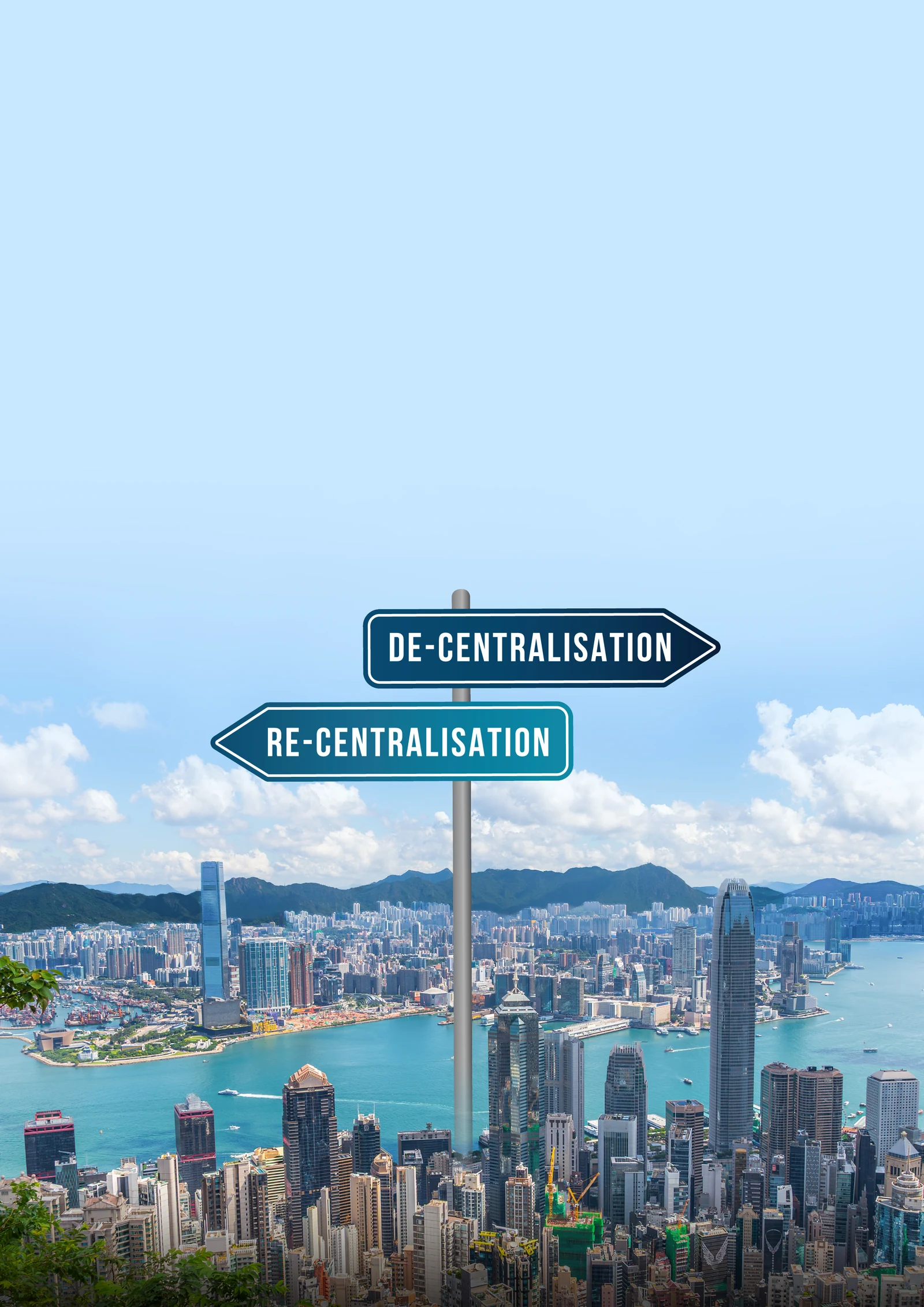
A sharp rebound in Premium Central—only took 13 months to catch up the loss in previous cycle of 36 months—has abruptly closed the tenant-favourable window, forcing occupiers into a strategic dilemma: renewal or relocate.
Staying in Central requires absorbing immediate rental spikes to lock in leases before escalating scarcity and further rate increases take hold. Conversely, decentralising unlocks a compelling arbitrage of HK$35–66 psf by relocating to West Kowloon, Causeway Bay, or Quarry Bay.
With core concessions vanishing, corporate decision-makers must weigh paying rising premiums for Central prestige against capturing scale and massive cost savings across Victoria Harbour. The next decentralisation and recentralisation wave has arrived.
Knight Frank
We like questions. If you’ve got one about our research, or would like some property advice, we’d love to hear from you.
Director, Head of Research & Consultancy, Greater China

Senior Economist, Research & Consultancy, Greater China

Assistant Manager, Research & Consultancy, Greater China

Assistant Manager, Research & Consultancy, Greater China

Executive Director, Head of Hong Kong Office Strategy & Solutions

Managing Director, South China and Head of GBA Office Strategy & Solutions

Executive Director, Head of Kowloon Office Strategy & Solutions

Managing Director, Greater China, Head of Commercial

Head of Capital Markets, Greater China